
Bangalore's real estate sector is governed by a layered framework of central and state legislations. A comprehensive guide to the statutory framework, title verification, RERA compliance, and the essential documents every buyer must examine before acquisition.
Introduction
The real estate sector in Bangalore has witnessed substantial growth, attracting individual purchasers as well as institutional investors. However, property transactions in Karnataka are governed by a combination of central and state legislations, municipal regulations, and regulatory mechanisms, non-compliance with which often leads to disputes concerning title, possession, or enforceability of contractual rights.
It is therefore imperative that every purchaser undertakes comprehensive legal due diligence prior to acquisition of any immovable property.
Statutory Framework Governing Property Transactions
Property transactions in Bangalore are primarily governed by the following enactments:
- Transfer of Property Act, 1882
- Indian Registration Act, 1908
- Indian Stamp Act, 1899 (as adapted by Karnataka)
- Real Estate (Regulation and Development) Act, 2016
- Karnataka Land Revenue Act, 1964
- Karnataka Municipal Corporations Act, 1976
The interplay of these statutes governs transfer, registration, land use, and regulatory compliance of real estate transactions.
Title Verification and Chain of Ownership
A valid transfer under Section 54 of the Transfer of Property Act requires that the transferor possesses a lawful and transferable title. Accordingly, the purchaser must verify:
- Chain of title for a minimum period of 20 to 30 years
- Nature of title (freehold or leasehold)
- Absence of litigation or competing claims
Defective title may render the transfer voidable and expose the purchaser to future litigation.
Encumbrance Certificate
An Encumbrance Certificate (EC), issued by the Sub-Registrar under the Registration Act, reflects registered transactions affecting the property. The EC must be examined to ascertain:
- Existing mortgages or charges
- Prior sale transactions
- Any registered encumbrances
However, it is pertinent to note that the EC reflects only registered transactions and does not disclose unregistered liabilities.
Registration and Stamp Duty Compliance
Under Section 17 of the Registration Act, 1908, a sale of immovable property of value exceeding rupees one hundred must be compulsorily registered. Adequate stamp duty must be paid in accordance with the Karnataka Stamp Act; an unregistered sale deed does not confer legal title.
Registration ensures enforceability and public notice of the transaction.
RERA Compliance and Buyer Protection
The Real Estate (Regulation and Development) Act, 2016 mandates registration of real estate projects and agents. Purchasers must verify project registration with Karnataka Real Estate Regulatory Authority. RERA provides:
- Disclosure of project details
- Protection against delayed possession
- Statutory remedies including compensation and refund
Non-registration of projects constitutes a statutory violation.
Land Use, Conversion and Zoning Compliance
Under the Karnataka Land Revenue Act, agricultural land must be converted for non-agricultural use prior to development, and land use must conform to zoning regulations under the Master Plan. Unauthorised conversion or land use may result in demolition or cancellation of approvals.
Essential Property Documents
A prudent purchaser must examine the following documents:
- Title Deed: evidencing ownership
- Agreement to Sell: outlining contractual obligations
- Sale Deed: instrument of transfer
- Khata Certificate and Extract: issued by BBMP evidencing municipal recognition
- Occupancy Certificate (OC): confirming construction in accordance with approved plan
- Completion Certificate (CC)
- Property Tax Receipts
Absence of any of the above may affect legality or marketability of the property.
Contractual Scrutiny of Builder-Buyer Agreements
The agreement governing the transaction must be examined for delivery timelines, penalty clauses for delay, force majeure provisions, and termination and refund conditions. Courts have consistently held that contractual obligations must be interpreted strictly, and one-sided clauses may be subject to challenge.
Limitations of Bank Due Diligence
While financial institutions conduct title verification before sanctioning loans, such scrutiny is limited to protecting the lender's interest and does not substitute independent legal due diligence. Purchasers are advised to obtain an independent legal opinion.
Common Legal Risks in Bangalore Real Estate
- Purchase of properties without clear title
- Acquisition of units without Occupancy Certificate
- Transactions involving unapproved layouts
- Misrepresentation by developers
- Non-compliance with RERA
Such defects often result in prolonged litigation and financial loss.
Conclusion
A real estate transaction is not merely a commercial decision but a legal act governed by statutory compliance and documentary scrutiny. The absence of proper due diligence exposes the purchaser to risks that may not be immediately apparent at the time of purchase.
Accordingly, it is advisable that every transaction be preceded by thorough legal verification to ensure validity of title, compliance with applicable laws, and enforceability of contractual rights.
Downloads
More Insights
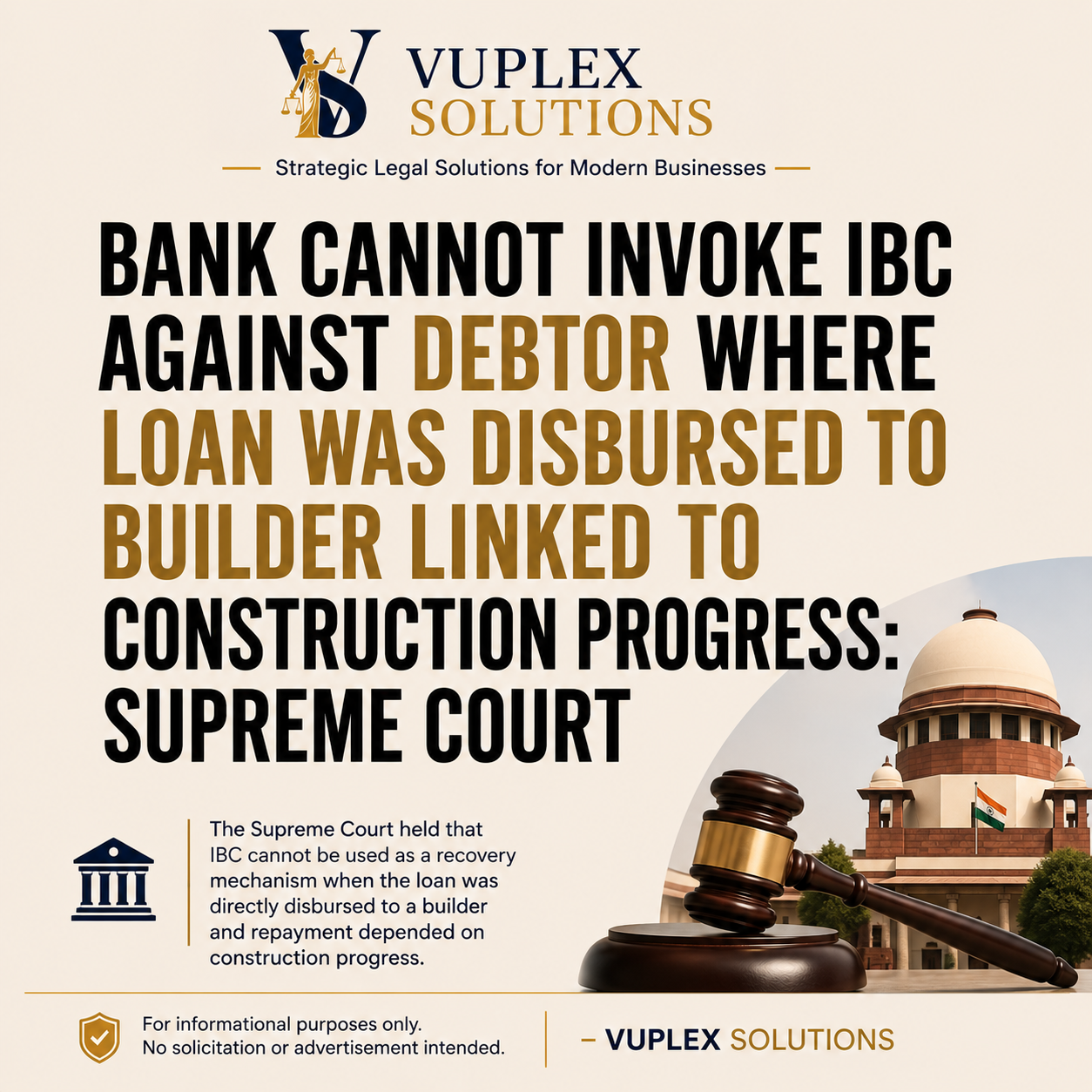
IBC Cannot Be Invoked as a Recovery Tool Where Loan Structure Is Performance-Linked: Supreme Court
The Supreme Court has reaffirmed that the Insolvency and Bankruptcy Code, 2016 is not a substitute for debt recovery, particularly where the underlying transaction involves performance-linked construction obligations and third-party disbursement.

Legal Scrutiny Report (LSR) in Banking: Nature, Scope, and Legal Position
In secured lending transactions involving immovable property, banks rely on a Legal Scrutiny Report to verify title, marketability, and enforceability of the security. An analysis of the statutory framework and the advocate's role in the LSR process.

Can Law Students Be Barred From Exams Over Attendance Shortage? Supreme Court Set To Decide
The Supreme Court has agreed to examine the Delhi High Court's 2025 ruling that law students should not be detained from examinations merely for attendance shortage. A look at the competing considerations of academic discipline and proportionality.