Can Law Students Be Barred From Exams Over Attendance Shortage? Supreme Court Set To Decide
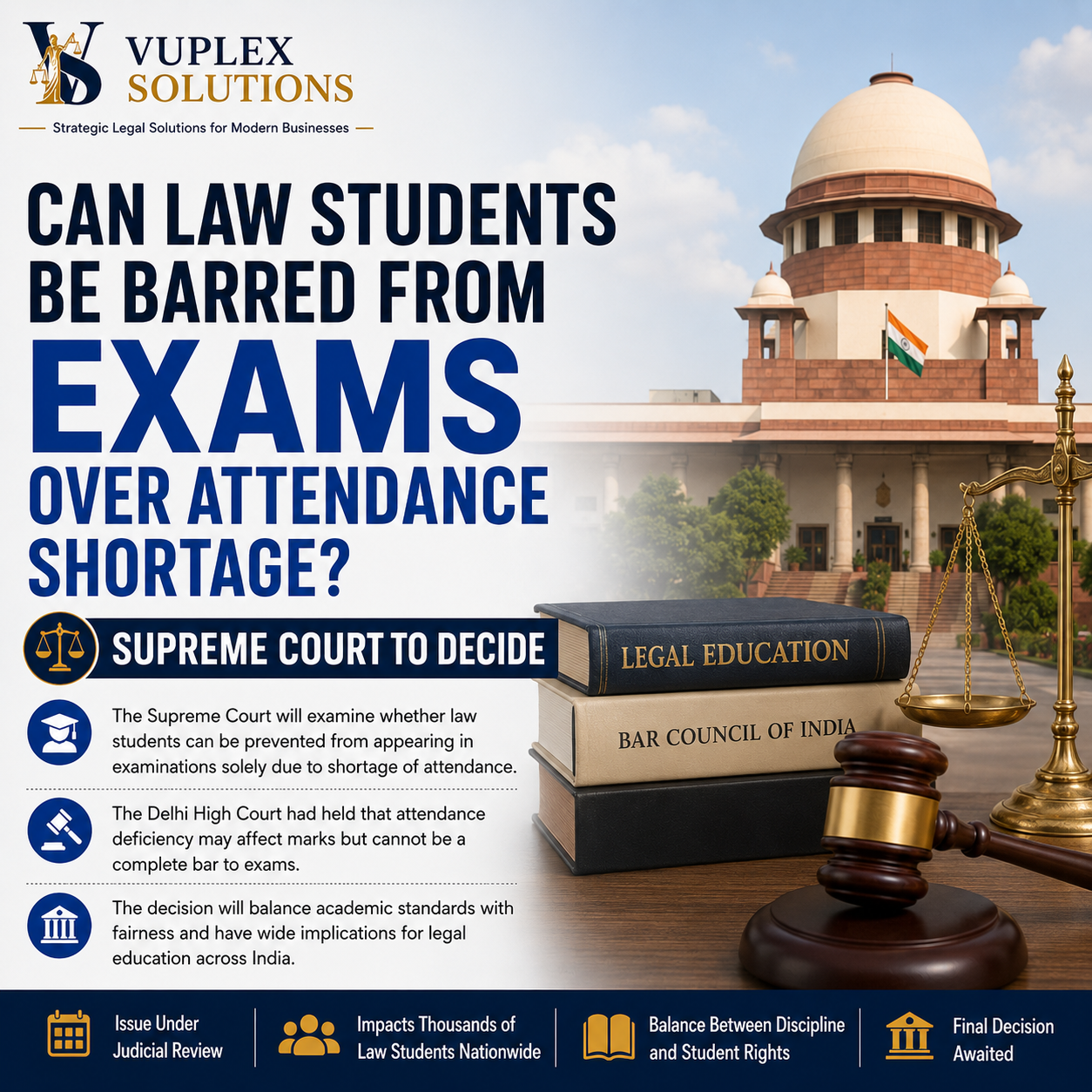
The debate surrounding mandatory attendance in legal education has once again reached the Supreme Court. The question now before the Court is whether law students can be prohibited from appearing in examinations solely on the ground of shortage of attendance.
Background
The debate surrounding mandatory attendance in legal education has once again reached the Supreme Court of India. The issue now before the Court is whether law students can be prohibited from appearing in examinations solely on the ground of shortage of attendance, despite broader concerns regarding fairness, academic progression, and mental well-being.
The controversy traces back to a significant judgment delivered by the Delhi High Court in 2025. In that decision, the High Court held that no law college or university should detain students from appearing in examinations merely because they failed to meet minimum attendance requirements. The Court observed that excessively rigid attendance enforcement could adversely affect students and even contribute to severe psychological consequences.
The High Court had also directed the Bar Council of India (BCI) to reconsider and review its attendance regulations governing legal education. It recommended reforms such as periodic attendance updates, parental notifications, and additional classes for students facing attendance shortages. Importantly, the Court stated that attendance deficiency may affect grades or internal evaluation, but should not automatically prevent students from writing examinations.
However, the matter did not end there.
The Supreme Court's Concerns
The Supreme Court has now agreed to examine the correctness and wider implications of that ruling after concerns were raised regarding its impact on standards of legal education. During recent proceedings, the Supreme Court expressed reservations over the Delhi High Court's approach and questioned whether such a position would dilute classroom participation and academic discipline in law colleges.
The Court reportedly observed that educational institutions and hostels cannot become mere boarding and lodging facilities where students remain formally enrolled without attending academic sessions. This reflects the larger judicial concern that legal education, unlike purely theoretical courses, requires continuous classroom interaction, practical exposure, discussions, and professional engagement.
Divergent Approaches Across High Courts
At the same time, courts across the country have recently shown differing approaches on attendance-related disputes.
In some cases, High Courts have granted relief to students who had already been permitted to sit for examinations, holding that their results should not later be withheld solely because of attendance shortage.
Conversely, other courts have refused relief where attendance deficiency was extremely low or where statutory attendance requirements under university and BCI rules were not satisfied. For instance, the Bombay High Court recently declined interim relief to a law student whose attendance was reportedly only 3 percent, despite the student citing a judicial internship as justification.
The Balancing Act
The legal issue therefore involves balancing two competing considerations:
- The need to maintain academic discipline and professional standards in legal education; and
- The need to ensure that attendance rules do not operate in an excessively punitive or arbitrary manner.
What Lies Ahead
The Supreme Court's eventual decision is likely to have nationwide implications for law colleges, universities, and professional education regulators. It may determine whether attendance norms should remain strictly enforceable, whether exceptions must be accommodated, and how far institutions can go in restricting students from examinations.
The case also raises a broader constitutional question regarding proportionality in academic administration. While institutions undeniably possess authority to regulate attendance, courts may ultimately decide whether completely denying examination access is a proportionate response in every case of attendance deficiency.
Until the Supreme Court settles the issue, the legal position remains under active judicial consideration, and educational institutions across India are closely watching the outcome.
More Insights

Legal Due Diligence in Real Estate Transactions in Bangalore
Bangalore's real estate sector is governed by a layered framework of central and state legislations. A comprehensive guide to title verification, RERA compliance, encumbrance checks, and the essential documents every buyer must examine before acquisition.
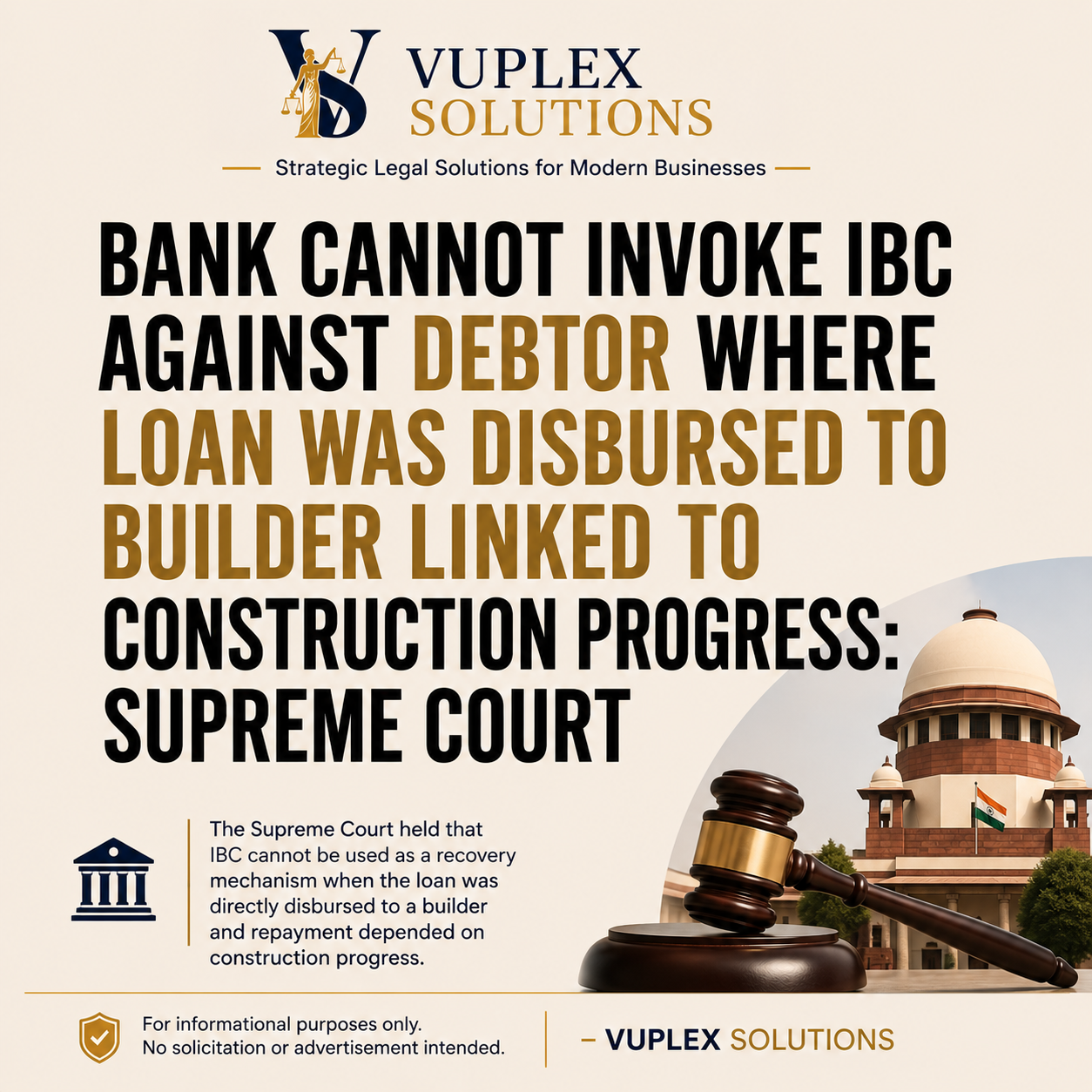
IBC Cannot Be Invoked as a Recovery Tool Where Loan Structure Is Performance-Linked: Supreme Court
The Supreme Court has reaffirmed that the Insolvency and Bankruptcy Code, 2016 is not a substitute for debt recovery, particularly where the underlying transaction involves performance-linked construction obligations and third-party disbursement.

Legal Scrutiny Report (LSR) in Banking: Nature, Scope, and Legal Position
In secured lending transactions involving immovable property, banks rely on a Legal Scrutiny Report to verify title, marketability, and enforceability of the security. An analysis of the statutory framework and the advocate's role in the LSR process.