When One Day Can Defeat an Insolvency Appeal: Supreme Court Clarifies the Strict Limitation Period Under the IBC
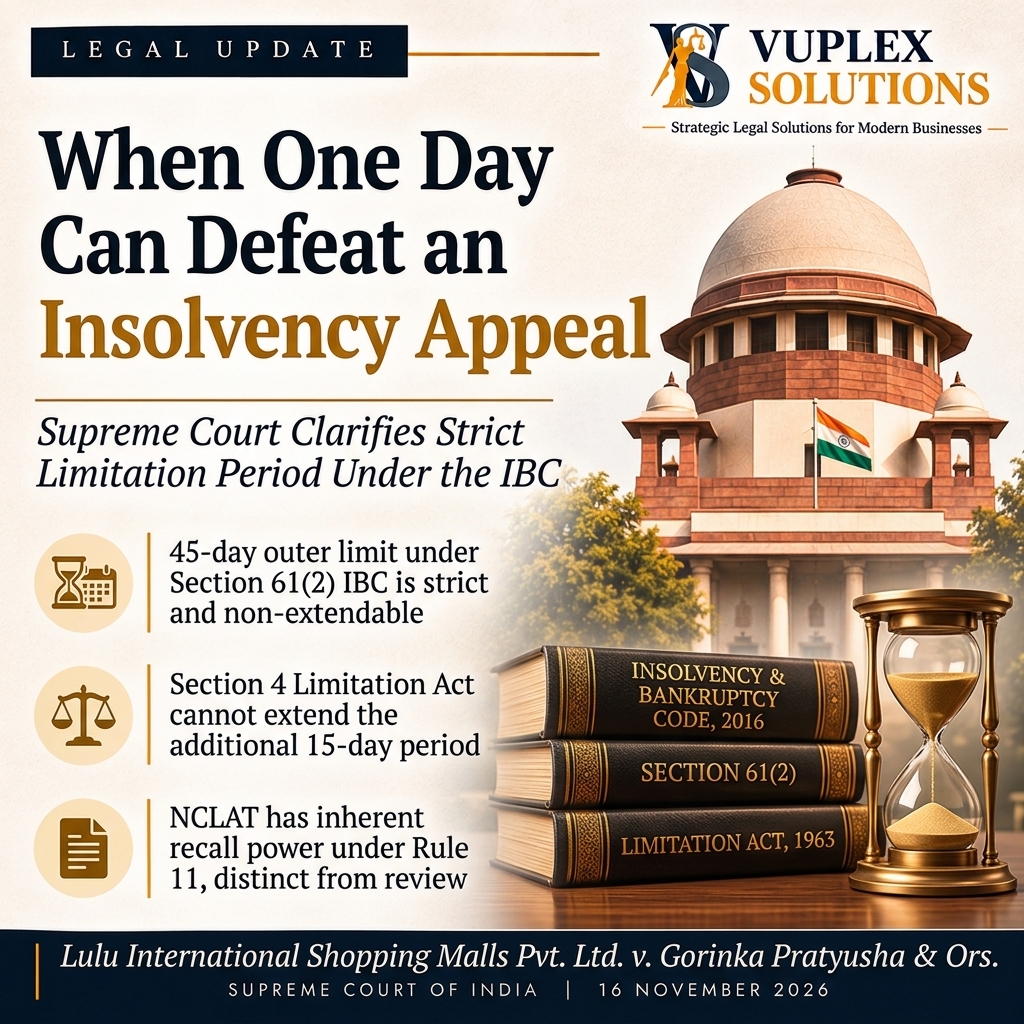
In insolvency proceedings, procedural timelines are not merely technical requirements. They are central to the objective of ensuring certainty, discipline, and timely resolution of corporate distress. In Lulu International Shopping Malls Private Limited v. Gorinka Pratyusha and Others (2026 INSC 1224), decided on 16 November 2026, the Supreme Court of India reaffirmed the strict nature of the limitation period governing appeals under Section 61(2) of the Insolvency and Bankruptcy Code, 2016 (“IBC”).
Introduction
The Supreme Court of India has reaffirmed that the statutory outer limit for filing an appeal under the IBC cannot be enlarged by importing general limitation provisions beyond what is expressly permitted by statute.
The Court held that the additional period of 15 days available for condonation of delay under Section 61(2) of the IBC cannot be extended by invoking Section 4 of the Limitation Act, 1963, merely because the last day falls on a court holiday.
This ruling reinforces an indispensable principle of insolvency jurisprudence: commercial rescue and resolution processes demand unyielding procedural certainty, and even a single day’s delay can render an appeal permanently fatal.
The Dispute Before the Supreme Court
The matter arose from the corporate insolvency resolution process of Manjeera Retail Holdings. The National Company Law Tribunal (“NCLT”) approved the resolution plan on 26 March 2025.
Certain respondents, who claimed to have entered into agreements for the purchase of commercial units in a mall project, challenged the approval of the resolution plan. Their grievance concerned the treatment of their payments as customer advances rather than recognition as claims of financial creditors.
Section 61(2) of the IBC prescribes a period of 30 days for filing an appeal against an order of the NCLT, with a further period of up to 15 days during which the National Company Law Appellate Tribunal (“NCLAT”) may condone delay upon being satisfied that sufficient cause exists.
In the present case, the statutory chronology was central to the dispute:
- 26 March 2025: NCLT approves the resolution plan.
- 25 April 2025: The statutory 30-day limitation period expired.
- 10 May 2025: The additional 15-day condonable period expired on a second Saturday (a tribunal holiday).
- 11 May 2025: The appeals were electronically filed on Sunday.
The NCLAT condoned the delay by applying Section 4 of the Limitation Act, which provides for the exclusion of a period where the prescribed limitation period expires on a day when the court is closed. The successful resolution applicant challenged this approach before the Supreme Court.
The Legal Question: Can Section 4 of the Limitation Act Extend the Additional 15 Days?
The central issue before the Supreme Court was whether Section 4 of the Limitation Act could be applied to extend the additional 15-day period available for condonation under Section 61(2) of the IBC.
Section 61(2) establishes two distinct legal components:
- Prescribed limitation period: An appeal must ordinarily be filed within 30 days from the date of the NCLT's order.
- Condonable period: The NCLAT may allow a further period not exceeding 15 days, provided sufficient cause for the delay is established.
The distinction between these two periods was decisive. The Supreme Court held that the expression “prescribed period” in Section 4 of the Limitation Act refers strictly to the period of limitation prescribed by law and does not include an additional period that a court or tribunal may permit in its discretion.
Consequently, the benefit of Section 4 cannot be extended to the additional 15-day condonable period under Section 61(2) of the IBC. The statutory outer limit therefore remains strictly 45 days.
Supreme Court's Reliance on the Principle in Tata Steel
The Court relied upon its earlier decision in Tata Steel Ltd. v. Raj Kumar Banerjee, (2025) 9 SCC 483, which clarified the distinction between the prescribed period of limitation and a further period that may be condoned by a court or tribunal.
The principle is significant because a statutory period of limitation and a discretionary extension operate fundamentally differently under Indian law:
- Where the prescribed period expires on a day when the court is closed, Section 4 may permit filing on the day the court reopens.
- However, this benefit does not automatically extend a further period that the adjudicatory forum is empowered to condone only within a specified statutory ceiling.
Applying this principle, the Supreme Court held that the NCLAT had incorrectly invoked Section 4 to entertain appeals filed beyond the 45-day outer limit.
The Court also observed that the appeals had been electronically filed on a Sunday, whereas electronic filing could have been undertaken on the preceding Saturday. The circumstances did not establish sufficient cause for the delay.
Can the NCLAT Recall an Order Passed Without Applying Binding Law?
An additional issue concerned the NCLAT's jurisdiction to recall its earlier order condoning the delay. The NCLAT had declined to recall its order, taking the view that it lacked the power to review its own decision.
The Supreme Court clarified the crucial distinction between the power of review and the power of recall:
- While the NCLAT does not possess a general power of review under the IBC, it may exercise its inherent procedural jurisdiction under Rule 11 of the NCLAT Rules, 2016, to recall an order in appropriate circumstances.
- The Court relied upon the principles recognised in Union Bank of India v. Dinkar T. Venkatasubramanian and Union Bank of India v. Financial Creditors of Amtek Auto Ltd., among other authorities.
- A recall application is not an opportunity to re-argue a matter merely because a party is dissatisfied with the outcome. It may, however, be invoked where an order suffers from a recognised procedural or jurisdictional defect warranting recall.
The Court further held that the pending recall applications meant that the condonation order had not attained finality and could be examined in the proceedings before it.
Final Decision
The Supreme Court allowed the appeals, set aside the NCLAT's order refusing recall, and held that the delay could not have been condoned by applying Section 4 of the Limitation Act to the additional 15-day period.
The appeals against the resolution plan approval were consequently dismissed as time-barred.
The decision reiterates that the statutory framework under the IBC must be applied strictly, particularly where the legislature has expressly prescribed a maximum period for condonation of delay.
What Does This Judgment Mean for Creditors, Resolution Applicants, and Corporate Debtors?
The ruling has practical implications for all stakeholders involved in the corporate insolvency resolution process:
- For creditors and homebuyers: A creditor or homebuyer intending to challenge an NCLT order approving a resolution plan must act strictly within the statutory period. A substantive grievance concerning the treatment of a claim will not be examined if the appeal is barred by limitation.
- For successful resolution applicants: The judgment strengthens the importance of procedural finality in insolvency proceedings. A resolution applicant should not have to face uncertainty arising from appeals entertained beyond the statutory outer limit.
- For insolvency professionals and legal practitioners: The ruling makes accurate limitation computation and timely filing essential. Parties must distinguish between the initial 30-day limitation period and the additional 15-day condonable period instead of treating the entire 45-day window as an ordinary limitation period.
- For parties seeking recall of NCLAT orders: The judgment also confirms that the absence of a general review power does not eliminate the NCLAT's inherent power to recall an order in appropriate circumstances. The availability of recall, however, does not create an alternative route for routinely reopening concluded proceedings.
Download Full Report
Get complete access to the detailed legal analysis on strict limitation periods under Section 61(2) of the IBC.
Download Document (.docx)Conclusion
The Supreme Court's decision in Lulu International Shopping Malls Private Limited v. Gorinka Pratyusha and Others reinforces the strict procedural framework governing appeals under the IBC.
The judgment draws a clear distinction between the prescribed period of limitation and the additional period available for condonation. It also clarifies that the inherent power of recall remains distinct from the power of review.
For parties involved in insolvency proceedings, the message is clear: legal rights must be pursued within the statutory framework, and procedural compliance is an essential part of effective legal recourse.
Case Reference & Key Provisions
Case Reference: Lulu International Shopping Malls Private Limited v. Gorinka Pratyusha and Others, 2026 INSC 1224, decided on 16 November 2026.
Relevant Provisions: Section 61(2), Insolvency and Bankruptcy Code, 2016; Section 4, Limitation Act, 1963; Rule 11, NCLAT Rules, 2016.
More Insights
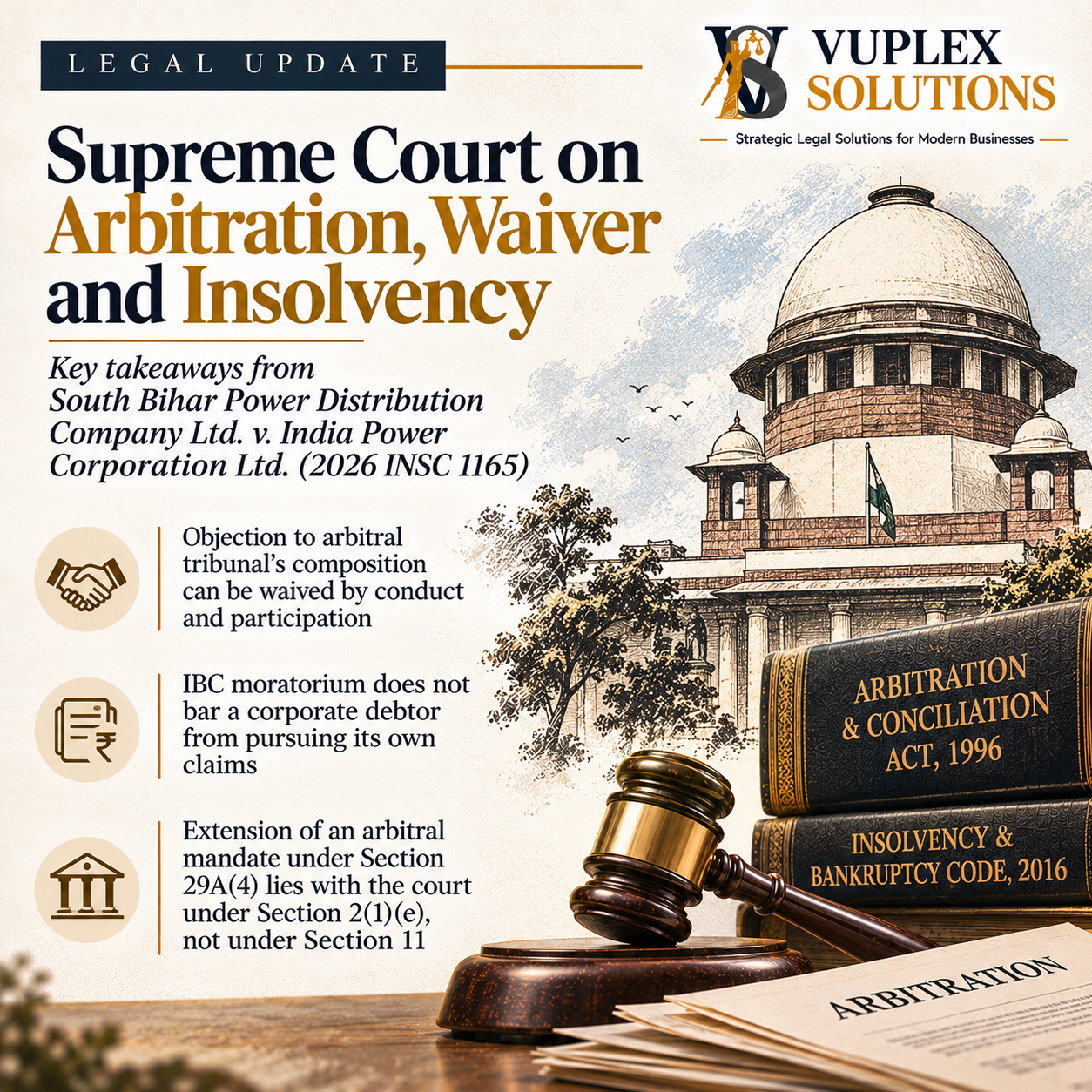
Arbitration Clauses, Waiver and Insolvency: Supreme Court Clarifies Limits of Objections
In South Bihar Power Distribution Company Ltd. v. India Power Corporation Ltd. (2026 INSC 1165), the Supreme Court clarifies waiver of tribunal composition objections, corporate debtor claims during IBC moratorium, and Section 29A(4) jurisdiction.
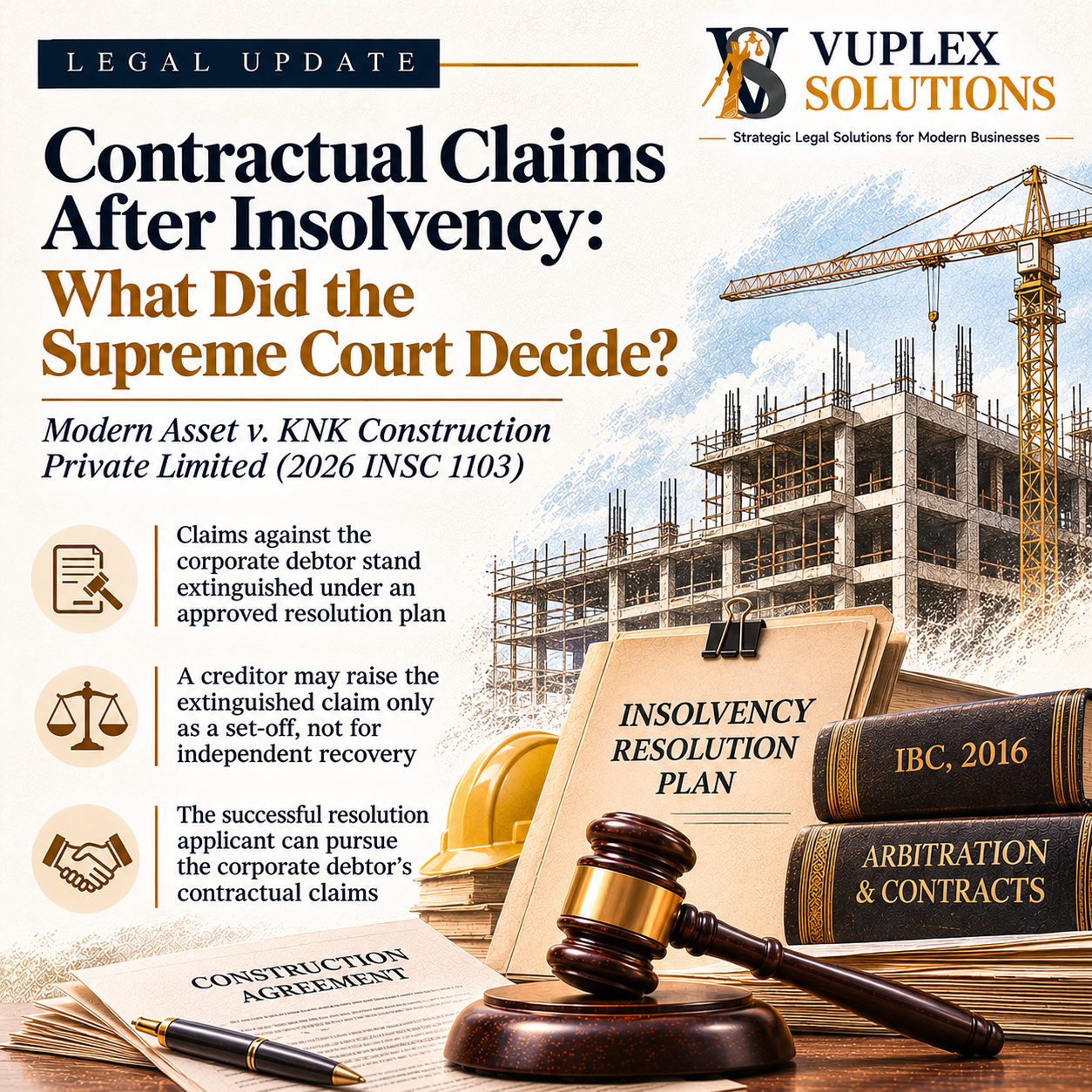
Can You Still Claim Money Under a Contract After Insolvency?
In Modern Asset v. KNK Construction Private Limited (2026 INSC 1103), the Supreme Court clarifies how the clean-slate principle under IBC treats contractual claims, surviving arbitration clauses, and defensive set-off.
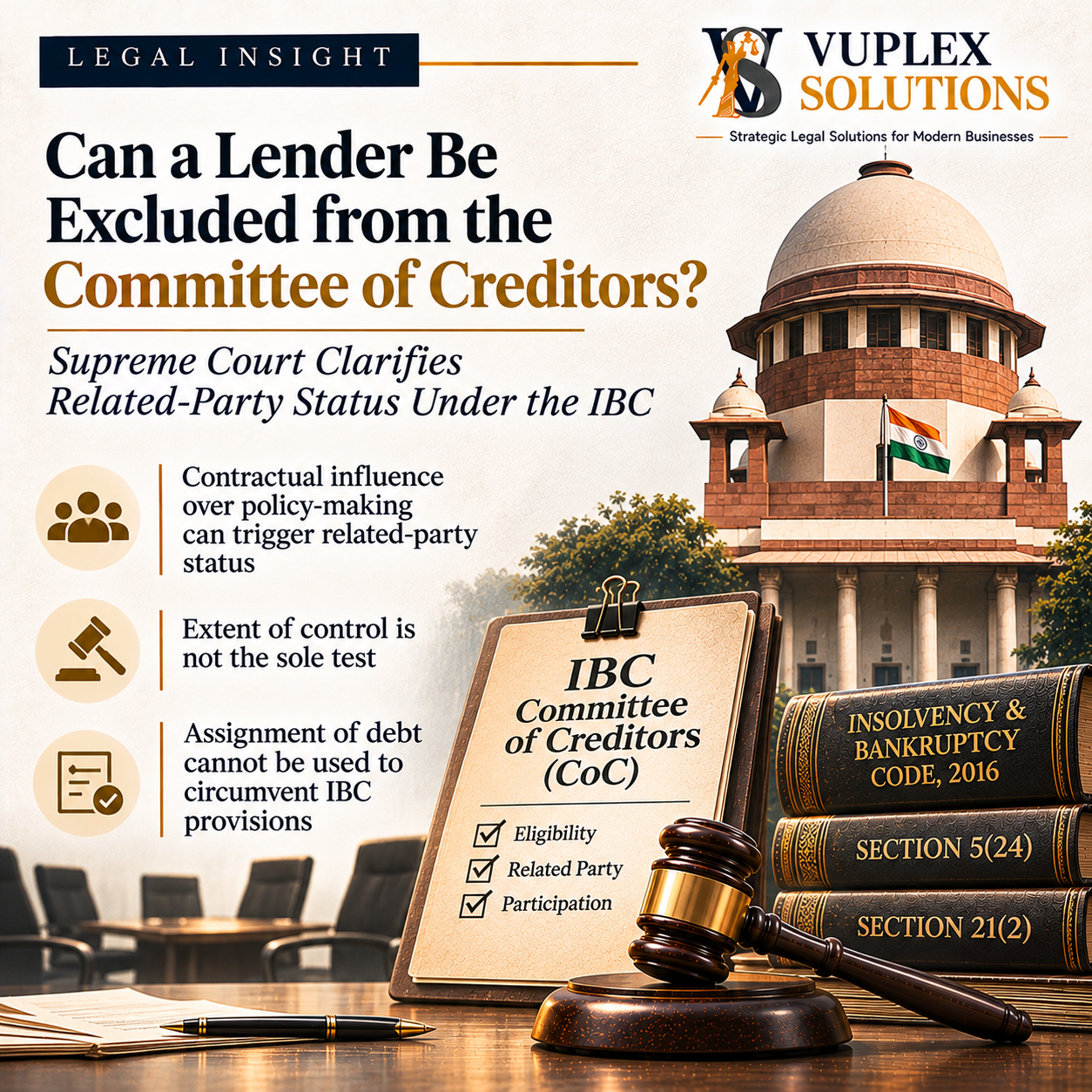
Can a Lender Be Excluded from the Committee of Creditors? Supreme Court on IBC
In ECL Finance Ltd. v. Abhinav Mukherjee (2026 INSC 1159), the Supreme Court clarifies that contractual influence over a corporate debtor's policy-making can trigger related-party disqualification from the CoC under the IBC.