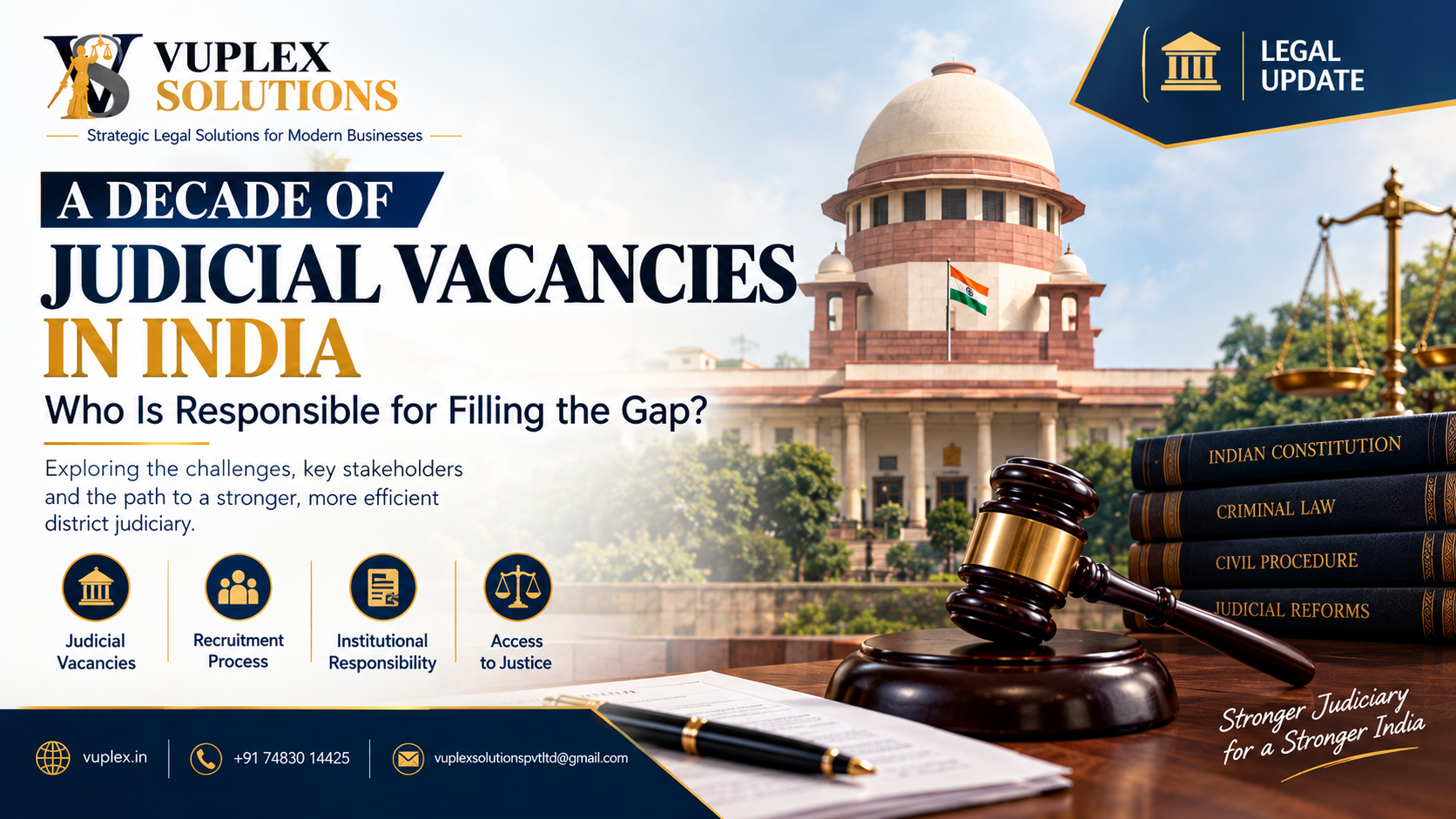
India’s justice delivery system depends heavily on the strength and efficiency of its district judiciary. However, persistent vacancies among judicial officers have remained a major institutional challenge for years.
Data compiled from annual Supreme Court reports and the JALDI Judicial Vacancy Portal indicates that vacancies in India’s district judiciary remained broadly between 20% and 29% from 2015 to 2025. The persistence of these vacancies raises important questions about judicial recruitment, institutional coordination, sanctioned strength and access to justice.
What Are Judicial Vacancies?
A judicial vacancy arises when a sanctioned judicial post exists but is not occupied by a serving judicial officer.
There is an important distinction between:
- Sanctioned strength – the number of judicial posts officially approved.
- Working strength – the number of judges actually serving.
- Vacancies – the difference between sanctioned and working strength.
Simply increasing the sanctioned strength of courts does not automatically increase the number of judges available to hear cases. Effective recruitment and timely appointments are equally important.
Judicial Vacancies Have Persisted for a Decade
The district judiciary has experienced a significant shortage of judges over an extended period.
According to the State of the Judiciary Report 2023, as of April 1, 2023, the district judiciary had a sanctioned strength of 25,081 judges, while the working strength was 19,781, resulting in a shortage of approximately 5,300 judges, or 21%.
The report also identified vacancies in both the District Judge and Civil Judge cadres, demonstrating that the shortage is not restricted to one level of the district judiciary.
Who Is Responsible for Filling Judicial Vacancies?
One of the most important questions is: Who is responsible for judicial recruitment?
The answer varies depending on the state and the level of judicial recruitment. Recruitment can involve:
- State Governments
- High Courts
- State Public Service Commissions
- Judicial recruitment authorities
- Other administrative institutions
For Civil Judge (Junior Division) recruitment, the State of the Judiciary Report found that 13 of the 25 states examined used State Public Service Commissions as the recruitment authority, while 12 relied on their respective High Courts.
This variation means that there is no single recruitment model operating uniformly throughout India.
The Problem of Unfilled Advertised Posts
One of the most concerning findings relates to recruitment to the Higher Judicial Services.
The 2023 State of the Judiciary Report examined recruitment in 24 states and found that only 29.1% of the advertised seats were filled in the last completed Higher Judicial Services examination considered by the report. Consequently, approximately 70.9% of advertised seats remained unfilled.
This indicates that the challenge is not merely about creating additional posts.
The recruitment pipeline itself can face significant difficulties, including:
- Delays in recruitment examinations
- Low numbers of candidates qualifying
- Administrative delays
- Different recruitment procedures between states
- Delays between advertisement and final appointment
Recruitment Can Take Years
Timely recruitment is essential when courts are already operating below sanctioned strength.
The State of the Judiciary Report examined recruitment timelines and found significant differences between states. For example, some recruitment processes took several hundred days, while certain Higher Judicial Services recruitments took considerably longer.
Long recruitment cycles can create a situation where vacancies continue to exist even after the need for additional judges has already been identified.
This creates a cycle: Vacancy → Recruitment announced → Examination/selection → Administrative process → Appointment → Judge joins.
If any stage takes too long, the vacancy remains unresolved.
Maharashtra and the Increase in Sanctioned Strength
Maharashtra provides an interesting example of the distinction between sanctioned and working strength.
According to data discussed in a recent analysis of judicial vacancies, Maharashtra's sanctioned district judge strength increased from 2,442 posts in 2022–23 to 5,471 posts in 2023–24. The increase contributed to a rise in the overall vacancy percentage because working strength did not increase proportionately at the same time.
This demonstrates why measuring judicial capacity only by sanctioned posts can sometimes provide an incomplete picture.
The real question is: How many judges are actually available to hear and decide cases?
How Do Judicial Vacancies Affect Access to Justice?
Judicial vacancies can have consequences throughout the justice system.
- 1. Increased workload for serving judges: When fewer judges are available, the existing judicial officers may have to manage larger caseloads.
- 2. Potential delays in proceedings: Higher workloads can contribute to delays in hearings and case disposal, although judicial vacancies are only one of several factors affecting case pendency.
- 3. Pressure on court infrastructure: Additional judges require appropriate courtrooms, administrative staff, technology and other facilities.
- 4. Impact on litigants: For individuals and businesses involved in litigation, prolonged proceedings can increase financial, operational and emotional burdens.
- 5. Reduced institutional capacity: A court system cannot operate effectively simply by having laws and court buildings. It also requires sufficient judicial and administrative personnel.
Judicial Vacancies Are Not Only a Recruitment Problem
It would be too simplistic to describe judicial vacancies purely as a shortage of recruitment.
The issue involves several interconnected factors: Sanctioning posts → Identifying vacancies → Advertising positions → Conducting examinations → Selecting candidates → Completing appointments → Ensuring infrastructure
Each stage requires coordination between relevant institutions.
The State of the Judiciary Report also highlighted a significant shortage of support staff in district courts. As of July 2023, district courts had a sanctioned staff strength of 2,73,696, with 74,524 vacancies, representing a 27.2% vacancy level.
Therefore, strengthening the judiciary requires attention not only to judges but also to the administrative workforce supporting the courts.
What Can Be Done to Reduce Judicial Vacancies?
Addressing the problem requires a long-term and coordinated approach.
- Faster Recruitment: Recruitment examinations and selection processes should follow predictable timelines.
- Better Coordination: High Courts, State Governments and Public Service Commissions should coordinate more effectively to prevent unnecessary administrative delays.
- Regular Vacancy Monitoring: Vacancies should be monitored continuously so that recruitment can begin before shortages become severe.
- Adequate Court Infrastructure: Increasing judicial strength should be accompanied by sufficient courtrooms, technology and support staff.
- Transparent Recruitment Timelines: Clear timelines can help identify where delays are occurring in the recruitment process.
- Stronger Institutional Planning: Judicial capacity should be planned based on workload, population, case filings, pending cases and long-term requirements rather than relying only on existing vacancies.
Why a Strong District Judiciary Matters
For many citizens, the district judiciary is the most important point of contact with the formal justice system.
Civil disputes, criminal proceedings, family matters, property disputes, commercial cases and numerous other legal issues may begin at the district or subordinate court level.
A sufficiently staffed district judiciary is therefore essential for effective access to justice. Strengthening the district judiciary can also contribute to improving public confidence in the justice delivery system.
The Way Forward
Judicial vacancies cannot be solved through a single measure.
India needs a coordinated approach that combines: Timely recruitment + adequate judicial strength + sufficient infrastructure + administrative support + institutional accountability.
The objective should not merely be to increase the number of sanctioned posts. The focus should be on ensuring that sanctioned positions are filled with qualified judicial officers and supported by adequate court infrastructure and staff.
Download Full Report
Get complete access to the detailed analysis of judicial vacancies in India.
Download Document (.docx)Conclusion
The persistence of judicial vacancies over the past decade highlights a structural challenge within India's justice delivery system.
With district judiciary vacancies remaining in the 20–29% range between 2015 and 2025, the issue requires sustained institutional attention.
The State of the Judiciary Report 2023 further demonstrates the scale of the challenge, including a 21% vacancy among district judicial officers and a substantial proportion of advertised Higher Judicial Services positions remaining unfilled.
Ultimately, strengthening India's judiciary requires more than creating new posts. It requires timely recruitment, effective coordination, adequate infrastructure and continuous institutional reform.
A stronger district judiciary means a stronger foundation for access to justice and the rule of law in India.
More Insights

Allahabad High Court on Hookah Bars: Public Health and Commercial Limits
The Allahabad High Court has delivered an important judgment holding that hookah services cannot be provided even within a designated smoking area, emphasizing public health over commercial interests.
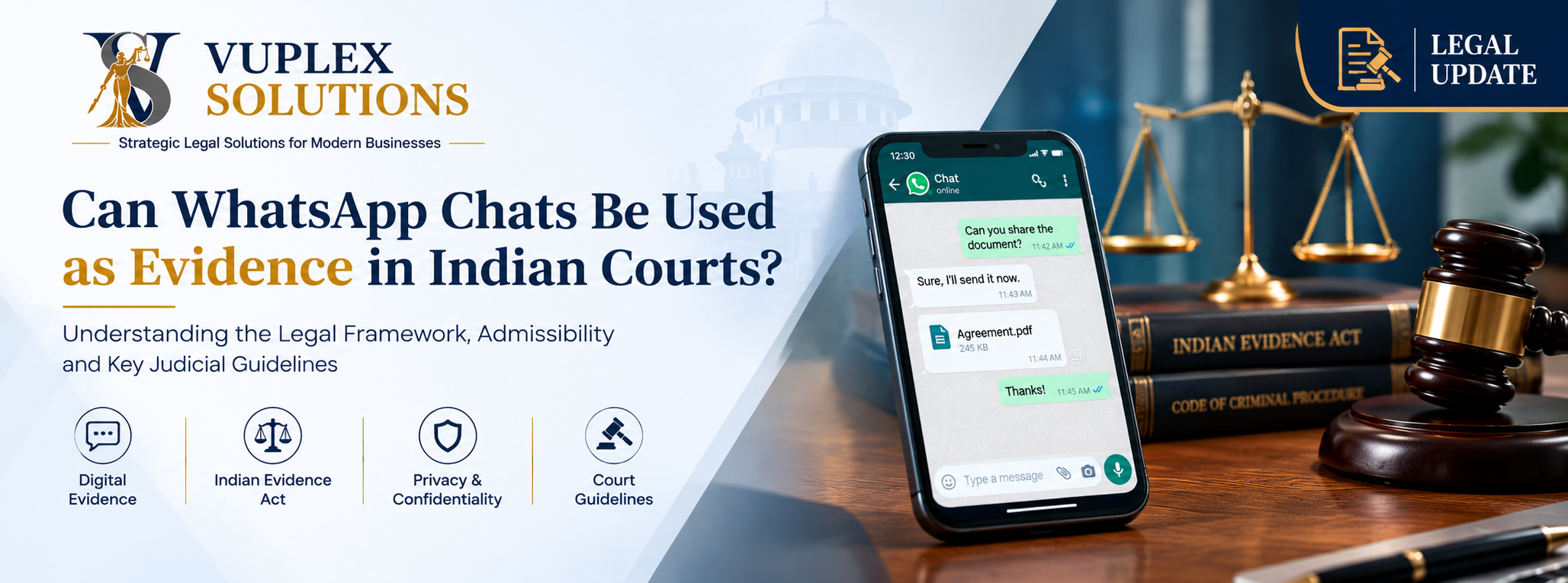
Can WhatsApp Chats Be Used as Evidence in Indian Courts?
The Bharatiya Sakshya Adhiniyam, 2023 (BSA) now governs electronic evidence. Discover the requirements for admissibility and why a simple screenshot of a WhatsApp chat may not be enough.
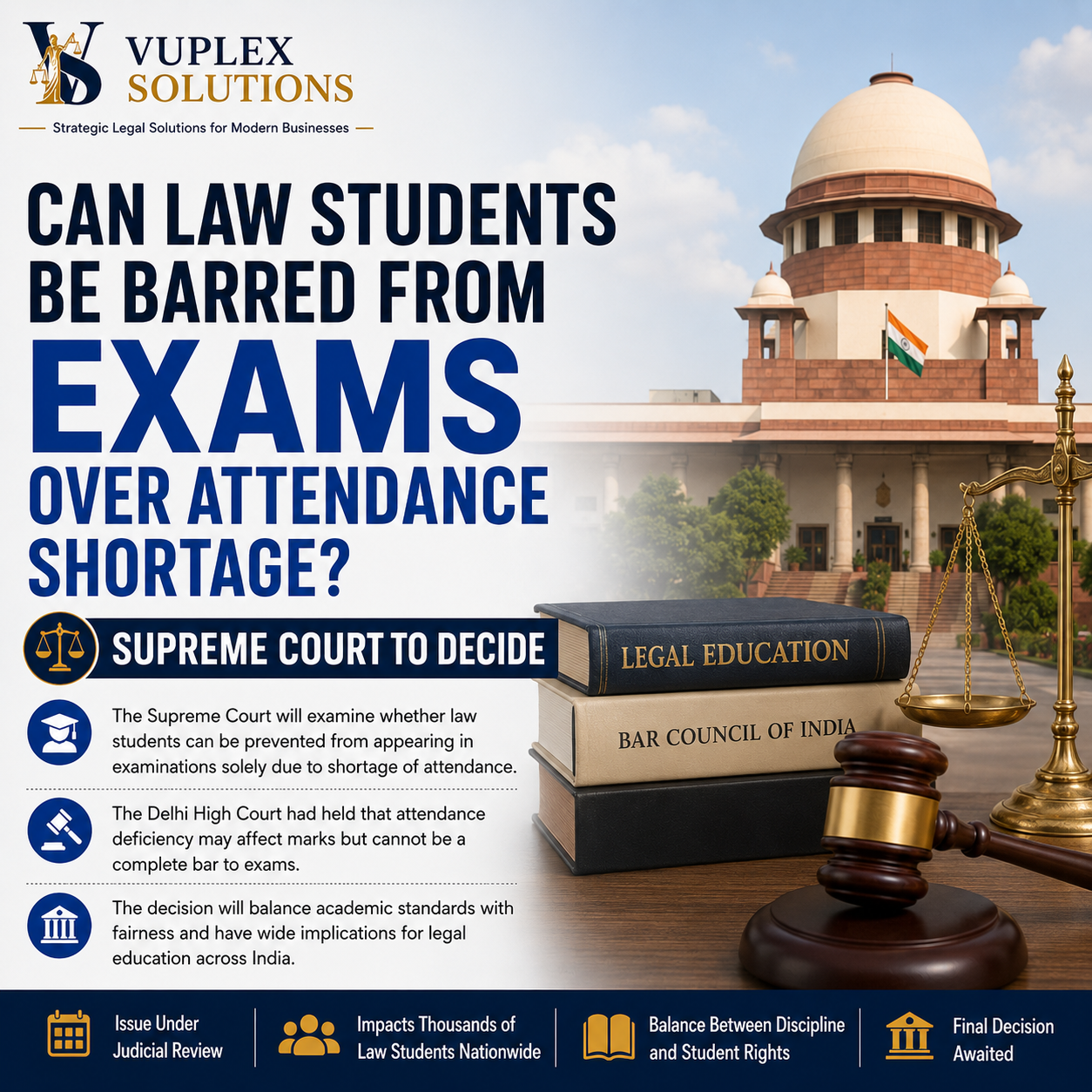
Can Law Students Be Barred From Exams Over Attendance Shortage? Supreme Court Set To Decide
The Supreme Court has agreed to examine the Delhi High Court's 2025 ruling that law students should not be detained from examinations merely for attendance shortage. A look at the competing considerations of academic discipline and proportionality.